
The celebration of the new year on January 1st is a relatively new
phenomenon. The earliest recording of a new year celebration is believed
to have been in Mesopotamia, c. 2000 B.C. and was celebrated around the
time of the vernal equinox,
in mid-March. A variety of other dates tied to the seasons were also
used by various ancient cultures. The Egyptians, Phoenicians, and
Persians began their new year with the fall equinox, and the Greeks
celebrated it on the winter solstice.
Early Roman Calendar: March 1st Rings in the New Year
The early Roman calendar
designated March 1 as the new year. The calendar had just ten months,
beginning with March. That the new year once began with the month of
March is still reflected in some of the names
of the months. September through December, our ninth through twelfth
months, were originally positioned as the seventh through tenth months
(septem is Latin for "seven," octo is "eight," novem is "nine," and decem is "ten."
January Joins the Calendar
The first time the new
year was celebrated on January 1st was in Rome in 153 B.C. (In fact, the
month of January did not even exist until around 700 B.C., when the second
king of Rome, Numa Pontilius, added the
months of January and February.) The new year was moved from March to
January because that was the beginning of the civil year, the month that the
two newly elected Roman consuls—the
highest officials in the Roman republic—began their one-year tenure. But
this new year date was not always strictly and widely observed, and the new
year was still sometimes celebrated on March 1.
Julian Calendar: January 1st Officially Instituted as the New Year
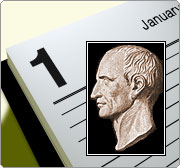
In 46 B.C. Julius Caesar introduced a new,
solar-based calendar that was a vast improvement on the ancient Roman
calendar, which was a lunar system that had become wildly inaccurate over
the years. The Julian calendar decreed that the new year would occur with January 1, and within the Roman
world, January 1 became the consistently observed start of the new year.
Middle Ages: January 1st Abolished
In medieval Europe, however,
the celebrations accompanying the new year were considered pagan and
unchristian like, and in 567 the Council of Tours abolished January 1 as the
beginning of the year. At various times and in various places throughout
medieval Christian Europe, the new year was celebrated on Dec. 25, the birth
of Jesus; March 1; March 25, the Feast of the Annunciation; and Easter.
Gregorian Calendar: January 1st Restored
In 1582, the Gregorian calendar reform restored January
1 as new year's day. Although most
Catholic countries adopted the Gregorian calendar almost immediately, it was
only gradually adopted among Protestant
countries. The British, for example, did not adopt the reformed calendar
until 1752. Until then, the British Empire —and their American colonies— still
celebrated the new year in March.
 The celebration of the new year on January 1st is a relatively new
phenomenon. The earliest recording of a new year celebration is believed
to have been in Mesopotamia, c. 2000 B.C. and was celebrated around the
time of the vernal equinox,
in mid-March. A variety of other dates tied to the seasons were also
used by various ancient cultures. The Egyptians, Phoenicians, and
Persians began their new year with the fall equinox, and the Greeks
celebrated it on the winter solstice.
The celebration of the new year on January 1st is a relatively new
phenomenon. The earliest recording of a new year celebration is believed
to have been in Mesopotamia, c. 2000 B.C. and was celebrated around the
time of the vernal equinox,
in mid-March. A variety of other dates tied to the seasons were also
used by various ancient cultures. The Egyptians, Phoenicians, and
Persians began their new year with the fall equinox, and the Greeks
celebrated it on the winter solstice.
No comments:
Post a Comment